

Sedentary Lifestyle: Health Risks, Warning Signs, and Simple Ways to Move More
Hours at a desk, endless scrolling, long commutes, and evenings on the couch may feel harmless—but together, they can quietly create a sedentary lifestyle that affects your health over time. Too much sitting and too little movement can contribute to weight gain, poor fitness, metabolic problems, and other long-term health concerns.
The good news is that you do not need an extreme workout routine to change course. Small, consistent habits such as walking more, taking movement breaks, and reducing prolonged sitting can make daily life more active. Practical ways to recognize sedentary habits, understand their risks, and build a healthier, more active routine.
What Is a Sedentary Lifestyle?
A sedentary lifestyle involves spending a large amount of waking time sitting, reclining, or lying down while using very little energy. Common examples include sitting at a desk, watching television, using a computer, playing video games, or sitting during long journeys.
The World Health Organization defines sedentary behavior as waking time spent sitting or lying with low energy expenditure. It recommends limiting sedentary time and replacing some sedentary time with physical activity of any intensity.
Read more: Uploadblog .com: Features, Content, and Benefits for Online Users
Sedentary Behavior vs. Physical Inactivity
These terms are related but not identical.
Sedentary behavior refers mainly to how much time you spend sitting or reclining while awake.
Physical inactivity means not doing enough physical activity to meet recommended levels.
For example:someone might run for 30 minutes every morning but then sit at a desk for eight hours, drive home, and spend several hours watching television. That person is physically active in one part of the day but may still have a highly sedentary routine.
Everyday Examples of Sedentary Behavior
A sedentary routine can include:
- Sitting at a computer for several hours
- Watching television for long periods
- Spending much of the day on a smartphone
- Studying without regular movement breaks
- Driving or riding for long journeys
- Sitting during meals and leisure time
- Working from home without getting up regularly
- Playing video games for extended periods
Why Has Sedentary Living Become So Common?
Technology has made many activities faster and easier, but it has also reduced the amount of movement required in everyday life. Office work often involves sitting at a computer. Online shopping reduces trips to stores. Cars and public transportation reduce walking. Entertainment is increasingly available through phones, televisions, tablets, and computers.
Convenience is not inherently unhealthy. The problem occurs when sitting becomes the default activity for most of the day. A useful approach is not to eliminate sitting completely. Instead, try to balance necessary sitting with regular movement.
Health Risks of a Sedentary Lifestyle
Spending excessive time sedentary is associated with several unfavorable health outcomes. According to WHO guidance, higher amounts of sedentary behavior in adults are associated with increased risks involving cardiovascular disease, cancer, type 2 diabetes, and mortality. Replacing sedentary time with physical activity—even light-intensity activity—can provide health benefits.
Heart and Metabolic Health
Long periods of inactivity can contribute to an overall pattern of low physical activity, which is unfavorable for cardiovascular and metabolic health.Regular movement helps your cardiovascular system work efficiently and supports healthy blood glucose regulation. Physical activity is also associated with a lower risk of several chronic diseases.
Weight and Muscle Health
When daily movement is low, it can become harder to balance energy intake and energy expenditure. A sedentary lifestyle may therefore contribute to weight gain when combined with other factors such as diet and insufficient physical activity.
Long periods of inactivity can also mean that muscles receive less regular use. Walking, resistance exercises, climbing stairs, and other forms of movement can help maintain strength and physical function.
Mental Well-Being
Movement is not only about physical health. Regular physical activity can also support mental well-being. WHO notes that physical activity can reduce symptoms of depression and anxiety while supporting overall well-being. Even a short walk can provide a useful break from repetitive screen-based work and give your mind a chance to reset.
Long-Term Health Concerns
The concern with sedentary behavior is not that sitting for a short period is automatically dangerous. The bigger issue is a consistent pattern of spending much of the day inactive.
For people who spend many hours sitting, increasing overall physical activity and reducing sedentary time are practical ways to improve their health habits. WHO specifically recommends limiting sedentary time and increasing physical activity according to individual ability.
Signs You May Be Living a Sedentary Lifestyle
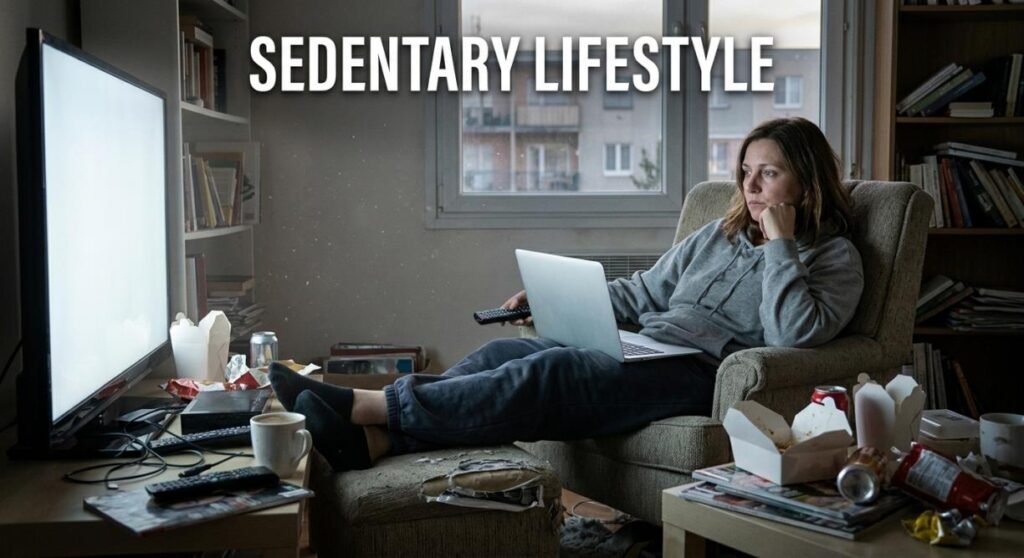
You may want to reconsider your daily routine if several of these situations sound familiar:
- You sit for most of your working or studying hours.
- You rarely take movement breaks.
- You drive even for short distances when walking is practical.
- Most of your free time involves screens.
- You feel stiff after sitting for long periods.
- You spend little time outdoors or walking.
- You avoid stairs whenever possible.
- Most of your daily activities require very little physical effort.
- You regularly feel that an entire day has passed without much movement.
How Much Physical Activity Do Adults Need?
For adults, current guidelines recommend at least 150 minutes of moderate-intensity physical activity each week, or 75 minutes of vigorous-intensity activity, or an equivalent combination. Adults should also perform muscle-strengthening activities on at least two days each week.
You do not have to complete all of this activity in one long workout. Physical activity can be divided across the week and into smaller periods. Here is a simple comparison:
| Activity Pattern | Example | Why It Helps |
| Light movement | Short walks, household chores, standing breaks | Helps replace sitting with movement |
| Moderate activity | Brisk walking, cycling, dancing | Builds aerobic fitness and supports health |
| Vigorous activity | Running or other high-intensity exercise | Provides stronger cardiovascular stimulus |
| Strength training | Squats, resistance exercises, weight training | Helps maintain muscle and strength |
| Daily movement | Walking to nearby places, taking stairs | Makes activity part of normal life |
Practical Ways to Reduce Sedentary Behavior
You do not need to completely change your lifestyle overnight. Start by making movement easier to fit into the day.
Take Regular Movement Breaks
If you work at a desk, set reminders to stand up and move periodically. Walk around the room, stretch gently, refill your water bottle, or perform a few minutes of light activity. These small interruptions can help break up long periods of sitting.
Add More Walking
Walking is one of the simplest ways to become more active. Consider walking while taking a phone call, walking to nearby destinations, taking a short walk after meals, or adding a few extra minutes to your normal route. You do not need to reach a perfect step count for walking to be worthwhile.
Make Your Workspace More Active
If possible, place frequently used items slightly farther away so you have a reason to stand up. You can also consider alternating between sitting and standing while working, provided the setup is comfortable and appropriate for your work. The goal is not to stand all day. The goal is to avoid remaining in exactly the same position for excessive periods.
Turn Everyday Tasks Into Movement
Household activities can provide opportunities to move. Cleaning, gardening, organizing, carrying groceries, washing the car, or walking around while completing routine tasks can all add movement to your day. These activities may not replace structured exercise entirely, but they can help reduce an inactive routine.
Build a Realistic Exercise Routine
If you currently do very little physical activity, avoid starting with an unrealistic plan. You might begin with:
- A 10-minute walk
- Two short walks during the day
- Basic strength exercises twice a week
- A weekend bike ride
- A few minutes of stretching or mobility work
- Gradually increasing your walking pace or duration
A Simple Daily Movement Plan
A sedentary lifestyle often develops because movement is not deliberately built into the day. A basic routine can change that.
Morning: Take a short walk or perform light mobility exercises.
During work or study: Stand and move periodically rather than remaining seated continuously.
Lunch break: Walk for several minutes instead of spending the entire break sitting.
Afternoon: Take another short movement break.
Evening: Add a brisk walk, cycling session, workout, or another activity you enjoy.
Before bed: Reduce unnecessary screen time and use some of your free time for gentle movement if comfortable.
How to Make an Active Lifestyle Sustainable

The best activity routine is usually one that fits your real life. Choose activities you enjoy rather than forcing yourself to do exercises you dislike. If you enjoy music, try dancing. If you prefer quiet time, go for a walk. If you enjoy social activities, exercise with friends or family.
It can also help to connect movement with existing habits. Walk after lunch. Take the stairs when practical. Stand while talking on the phone. Walk to a nearby shop instead of driving when appropriate. Another useful strategy is to make your environment encourage movement.
Keep comfortable walking shoes accessible, place reminders near your workspace, and schedule activity like any other appointment. Most importantly, do not treat one inactive day as failure. A healthy lifestyle is built over weeks, months, and years—not through perfection on a single day.
If you have a chronic medical condition, significant mobility limitations, or concerns about starting exercise, consider speaking with a qualified healthcare professional about an appropriate activity plan.
Final Thoughts
A sedentary lifestyle can slowly turn everyday comfort into a serious health challenge. Hours of sitting, limited movement, and excessive screen time may seem harmless today, but repeated day after day, they can affect fitness, weight, heart health, and overall well-being. The solution is not perfection—it is consistent movement. Stand up regularly, walk more, take active breaks, choose stairs when possible, and make exercise part of your routine.
Every small movement counts. This article has shown that reducing sedentary behavior is realistic and achievable without completely changing your life. Start with one simple habit today, build gradually, and let consistent movement become part of your healthier future.
FAQs about sedentary lifestyle
Q1: What is a sedentary lifestyle?
Ans: A sedentary lifestyle means spending much waking time sitting, reclining, or doing very little physical activity.
Q2: Is sitting all day bad for your health?
Ans: Sitting excessively may increase health risks, including heart disease, diabetes, obesity, and other chronic health problems.
Q3: Can you have a sedentary lifestyle even if you exercise?
Ans: Yes, regular exercise does not completely offset spending most of your remaining day sitting or inactive.
Q4: How can I reduce a sedentary lifestyle?
Ans: Take movement breaks, walk regularly, use stairs, stretch often, and reduce unnecessary screen-based sitting time.
Q5: How much exercise should adults get each week?
Ans: Adults should generally complete 150 minutes of moderate activity weekly, plus muscle-strengthening activities twice weekly.
Q6: Is walking enough to improve an inactive lifestyle?
Ans: Walking is an excellent starting activity and can improve fitness while reducing daily inactivity and prolonged sitting.
Q7: What are simple exercises for sedentary jobs?
Ans: Try walking, squats, stretching, stair climbing, cycling, and simple resistance exercises during regular daily routines.


One Comment